Amplispot creates professional websites for insurance agents that generate leads, build trust, and rank higher on Google.
Why Choose Amplispot for Websites for Insurance Agents?
Our websites for insurance agents are SEO-optimized to rank locally and nationally.
We design responsive websites for insurance agents that look perfect on any device.
We integrate CRMs, quote forms, and tools into websites for insurance agents to drive conversions.
Amplispot offers affordable, scalable websites for insurance agents with full support and analytics.
Types & Features of Websites for Insurance Agents
Lead-Generating Websites for Insurance Agents
These websites for insurance agents focus on converting traffic into leads using contact forms, instant quote tools, and call-to-action buttons designed to drive user engagement.
SEO-Focused Websites for Insurance Agents
SEO-optimized websites for insurance agents are built to dominate Google rankings with fast loading times, keyword-rich content, schema markup, and mobile-first design.
Custom-Branded Websites for Insurance Agents
These websites for insurance agents reflect your unique brand identity with custom color schemes, personalized content, and integrated service listings to build authority and trust.
Frequently Asked Questions about Websites for Insurance Agents
What makes a good website for an insurance agent?
A good website for an insurance agent includes lead capture forms, local SEO, fast load speed, mobile optimization, and trust-building content like testimonials and service pages.
How much does a website for insurance agents cost?
The cost of websites for insurance agents varies, typically starting from $500 for basic sites to $3,000+ for custom builds with integrations and SEO services.
How long does it take to launch an insurance agent website?
Most websites for insurance agents can be launched within 2–4 weeks depending on the complexity, content readiness, and integrations required.
Can I get leads directly from my insurance website?
Yes, with proper design and SEO, websites for insurance agents can generate leads through quote forms, chatbots, and click-to-call buttons.
Does Amplispot offer hosting and maintenance?
Yes, Amplispot provides full hosting, security updates, and ongoing maintenance for all websites for insurance agents built by our team.
Potential patients looking for a healthcare practitioner usually do their research online. They may use search engines to get reliable and comprehensive information, or they could turn to social media. Nonetheless, you can get better results by utilizing digital marketing tools, platforms, and services in ayurvedic hospitals.
Ensure that your practice is listed on every internet site where people may be looking for your services. This will result in more visitors to your website and, consequently, more foot traffic. Digital marketing for ayurvedic companies entails reaching out to large (B2C) or corporate (B2B) audiences rather than individual consumers.
The following are ten ways to market your Ayurveda clinic
1. Create a website
Making a website simple to navigate, effectively communicating with patients, and visually appealing may be your most powerful online marketing weapon. First, your practice's website should be developed with specific marketing objectives. Then, create an atmosphere for success around the goals you've chosen.
Your practice's address, phone number, and directions should continuously be published on your website. In addition, your website must have only a few pages describing your services and a section with instructional information to help your audience better understand the health sector and other health issues.
Make certain that your website is included in search engine listings like Bing Business, Google Business, or other business directories. Google and Bing's listings are always free. However, if you have a large budget, you may wish to seek a premium directory listing if you want greater exposure.
2. Optimize your website for search engines.
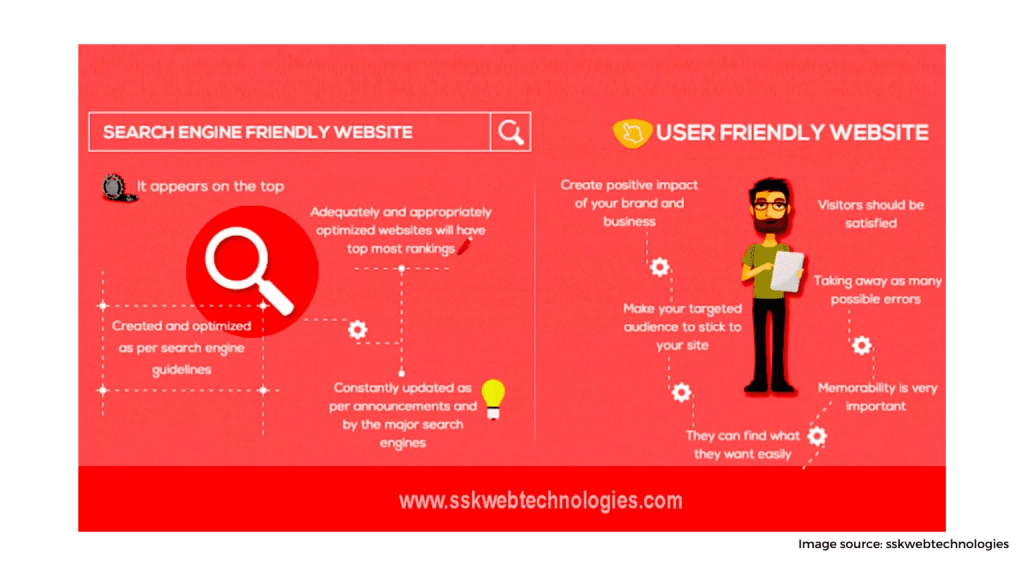
It's time to ensure your website is search engine friendly now that you've got one. Search engine-friendly templates may be created quickly using a web designer or one of the services listed above.
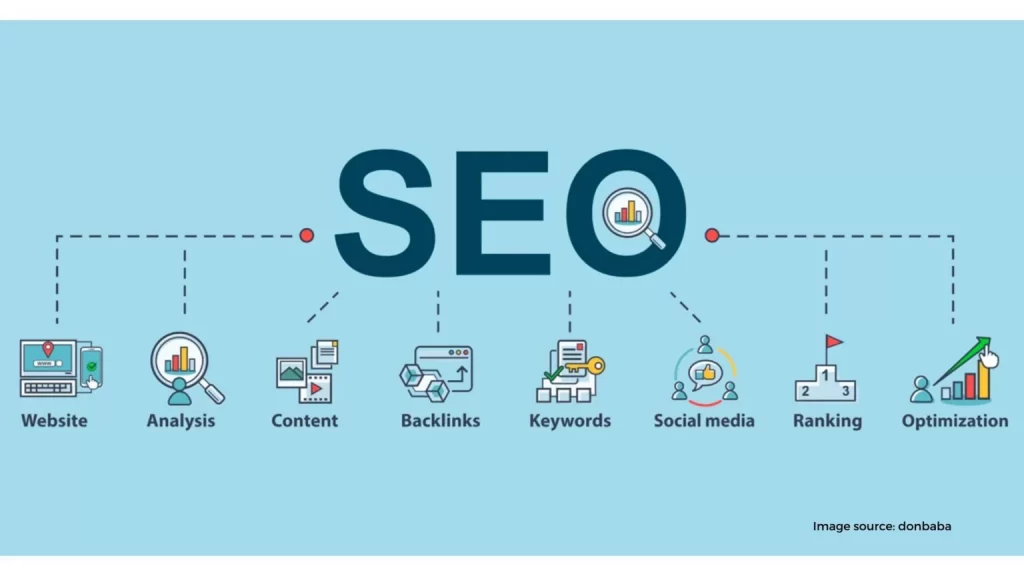
To guarantee that your website appears at the top of search engine results for relevant keywords, search engine optimization (SEO) employs several techniques. The following items affect a website's ranking:
On-page and off-page SEO are two types of SEO. The on-page elements are conditions that you can control, the website owner. Because you have control over your website, you have control over the on-page variables. Off-page SEO considers external factors such as links to your site and social media marketing.
If you want someone to click on the search engine results page, your title tag should be understandable and straightforward to entice them and not seem robotic. The meta description appears below the title tag on a search engine results page and is between two and three sentences long. When you establish a local presence on a business listing, it's easier to promote your brand in the neighborhood. This form of strategy, known as local search engine optimization (local SEO), helps visitors find your website by increasing their visibility in search engines.
3. Educate your target audience with unique content.
It's essential to produce and distribute high-quality content that provides value to your readers while fostering trust between them and your clinic over time. These are examples of blog entries, eBooks, essays, and white papers. In addition, this will contribute to the improvement of search engine optimization and long-term traffic to your website.
This information should assist with answering the most common questions patients ask. On your website, you can educate readers about the process and establish your practice as an authority on the subject by answering these queries.
Too often, medical practitioners are either too busy or simply unwilling to spend time creating content that they may get in trouble for if presented incorrectly. A content creation opportunity for your practice provides a chance to share information about your health and area of expertise with customers. No other physician has taken the initiative to answer these concerns.
4. Optimization for mobile phones
Today, mobile-friendly websites and applications are a critical aspect of search engine rankings. Because most people use mobile devices to look for information, any website or program that does not adapt to mobile optimization will be ignored by consumers.
Today, several successful ayurvedic companies use a tablet and smartphone-friendly tools to improve their exposure. Consider the mobile environment and SEO strategy while developing your brand's website or app. When optimizing your website for mobile devices, keep the following in mind:
Make sure your website works on all devices by using responsive design.
Make your website load faster.
Keep your material brief and to the point.
Use big typefaces and buttons.
5. Generate leads with compelling call-to-action (CTA).
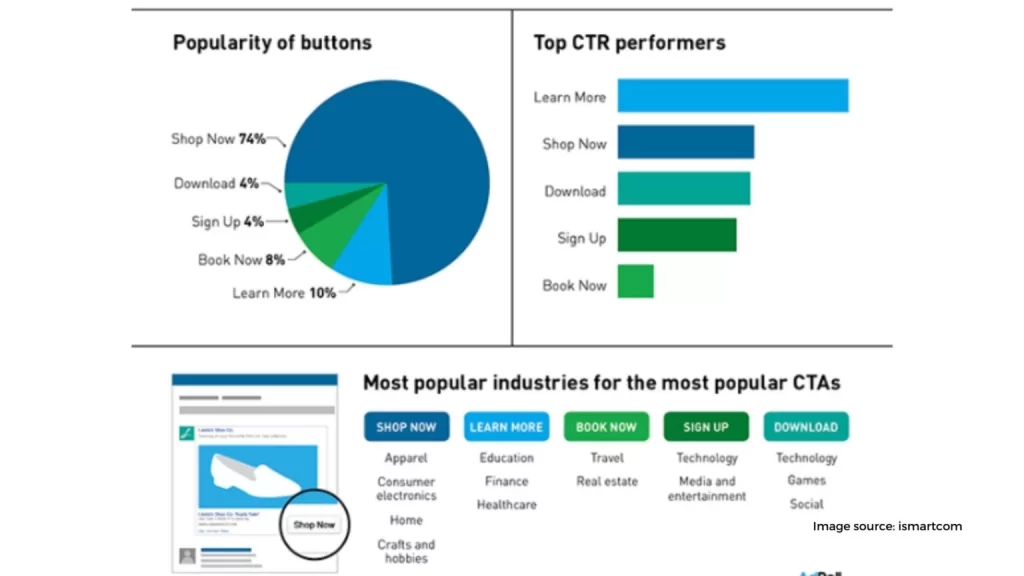
A vital component of an ayurvedic website is the inclusion of call-to-actions (CTAs) that urge patients to contact you for an appointment or join your newsletter. The most important location to place these CTAs is above the fold, the first thing visitors see when they arrive on your website. Above the fold implies that it can be seen without scrolling down.
Your call to action (CTA) should be as simple and straightforward as possible. The text should be clear and concise, with a distinct button that stands out from the rest of the website's design. When it comes to Ayurveda, your CTA's may include the following:
Make an appointment for a free consultation
Get a free e-book on whatever you want.
Sign up for our newsletter
You may produce leads by utilizing CTAs on your website and expand your Ayurvedic practice.
6. Take a cue from other sectors.
Consider how other businesses have succeeded in reaching their customers to help you differentiate yourself from the competition. Competitive research is a common practice among companies as a marketing and brand positioning technique. However, if all healthcare rivals are conducting comparative competitive research to obtain insights, everyone begins to communicate with one another.
Get ideas for marketing your practice in the most fantastic way from firms from distinct sectors. What are they doing to stand out in their field? What is the difference between this and your regular approach? How can you improve it? You may never know where your next fantastic idea will come from.
7. Use Google Analytics.
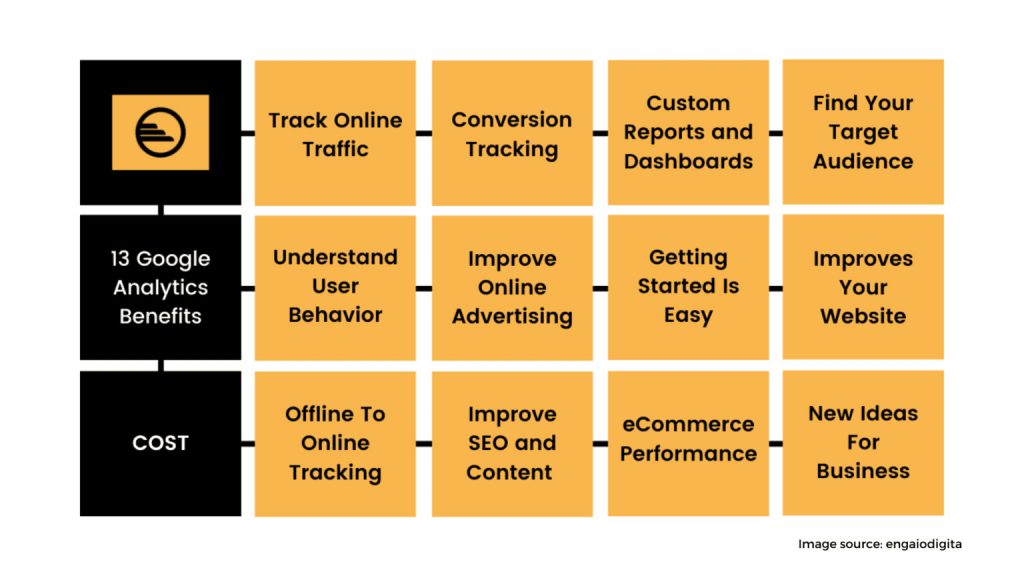
Google Analytics is a cost-effective, user-friendly web analytics solution that lets you see how effectively your website converts visitors into customers. It also contains valuable information on your audience's characteristics, interests, and behavior.
Google Analytics is a free service offered by Google that may be used to monitor both on-site and off-site activities. For example, if someone reads one of your blog entries and then searches for your practice on Google, you will be recorded as a conversion in Google Analytics. Conversely, if someone skims through your blog article but does not make any purchases after doing so, this is considered an exit from the site.
You can make improvements that result in more website traffic and conversions if you have a clear picture of how consumers use your site.
Pro tip :
You can keep track of your existing customers with email newsletters. You may monitor which items you are selling the most. You may also follow who is interested in purchasing your services. This also makes you feel more confident since you are familiar with your target demographic. This is critical for the market entry strategy for ayurvedic products
8. Give your patients the option to promote your clinic on their own.
One of the most potent methods to build a patient base over time is word-of-mouth marketing, but how can you assist your patients in growing your following for you?
After the visit, you may use online questionnaires or a feedback form on your website to assist your patients in processing their experience. Again, you encourage your patients to feel that their voices are heard and that their input is respected when you consider their comments.
You can use this information to inform your practice of what will and won't work for you. Make modest changes to your approach in response to this feedback, and patients will have a better experience and be more vocal about your services.
9. On social media, be active but not too engaged.
There are a lot of buzzwords out there in the world of online marketing, but there's substance behind the flames. This is because, regardless of your company's size, you may give practical exposure to your material through social media.
Create a Facebook page, Twitter account, and LinkedIn profile for your clinic. These profiles should be kept up to date with your original material and content from other reputable sources as long as it is relevant.
Every blog and other material on your website should contain social sharing buttons. This will allow readers to easily share your material across the social channel to which they are engaged. Consult social media marketing for ayurvedic clinics if you want better results.
Pro tip:
A competent and trusted digital marketing company will work with you to reach the proper target audience and inform them about your offerings. Make sure to publish your findings and progress online.
10. Video marketing is critical.
Don't forget to put out some video marketing as well. Make your consumers a part of your testimonial efforts in such a way that allows them to speak for you most genuinely and effectively possible.
You can post your video marketing campaign on YouTube and then embed those videos via your website. Since YouTube is a search engine in its own right, you may discover video content there through search results, channel subscribers, and wherever it is embedded (like your website).
Video content must give valuable information in the same way that your website's written content does. In addition, the video should be exciting and address a problem or issue your target audience is facing.
Having a strategy in place for each video you make is also critical. For example, what is the aim of the video? Who is your intended audience? What type of call-to-action would you want people to perform after watching the video?
Conclusion
Ayurvedic clinics and hospitals are on the rise in the market. In the current competitive environment, relying on traditional marketing is no longer viable. Your ayurvedic clinics can be promoted using digital marketing to reach a large audience, build brand awareness, engage customers, and market your clinic. Expanding your ayurvedic business by promoting your brand on various platforms is possible. Also, explore types of Ayurveda digital marketing channels to promote your ayurvedic company.
A study revealed that much online advertising for Ayurveda treatments had aided hospitals in increasing revenues by attracting clients online. Online sales have a significant impact on the growth of your clinic or hospital. It's critical to diversify your market in order to achieve the finest digital marketing strategy for Ayurvedic items. The future of Ayurvedic goods is extremely bright. Companies marketing more and more Ayurvedic products are engaging in quality, creative, and strategic marketing. Lastly, You have to try and test various digital marketing strategies for ayurvedic products to find out the best-suited channel for your product.
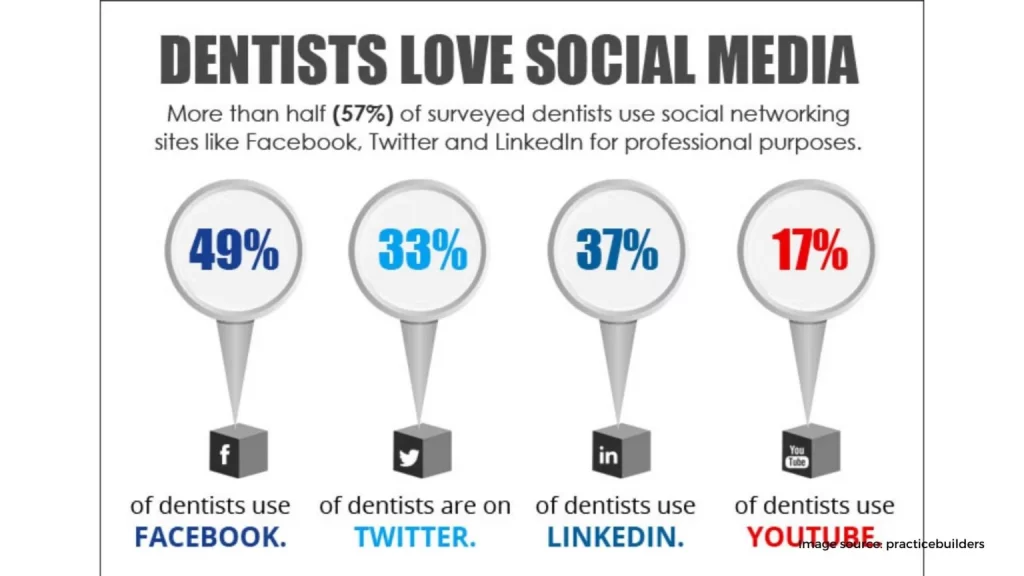
By 2028 the dental industry is expected to be worth $52.1 billion. There are over 150,000 dentists in the United States alone. And yet, only 24% of dentists feel they’re effectively using social media marketing to grow their business.
If you’re one of the 76% of dentists not using social media to your advantage, this guide is for you. We’re going to show you how social media can be a powerful marketing tool for dentists, and how to use it effectively.
For decades, dentists have relied almost exclusively on reputation and word of mouth marketing to grow their business. But it's 2022, and your audience is most likely online. In the era of digital marketing, whether you use blogs, video marketing, sponsored social media advertisements, or podcasts to market your practice, you must understand the fundamentals of social media marketing for dentists.
There are many strategies to enhance your ability to attract, retain, and ultimately market to your patients in the same way that there are in any other sector. And for the purpose of this post, we'll be discussing dentists who need a little more help with their social marketing strategy.
Let’s get started!
Why Does Social Media Marketing Matter For Dentists?
Dentists are just starting to embrace social media marketing, but more of them are recognizing the value of being active on Twitter, Facebook, and Instagram. What better way to gain a devoted client than to constantly demonstrate them that there's nothing to be afraid of? In an industry where 15% of the population is quivering in fear, what could be
Dentists find themselves in a somewhat unique position when compared to other businesses. Clothing stores, software companies, restaurants, and various other enterprises must persuade consumers that what they are selling is worth the money – even if it's something they don't need. Dentists, on the other hand, do not have to persuade people that they should visit a dentist. Everyone understands that they need to go to the dentist.
The biggest problems that dentists confront are getting prospective patients to remember to make appointments, as well as assisting them in overcoming their dread and anxiety about dental visits.
Finally, it's all about establishing trust and gaining the patient's confidence.
The ultimate approach to develop connections with your audience is through dental social media marketing. It means convincing your patients that you can provide a pain-free experience for a dentist.
Patients can be made more at ease before they visit your clinic by utilizing social media. Let clients know they're in good hands by demonstrating your authority, track record, and industry expertise. Remove the bad connotation of going to the dentist by using fun and humorous social media content. You entice clients to look forward to seeing you by offering your practice a unique personality. It's all about trust once again.
Remember that you're not simply selling toothpaste and root canals–you're also offering a pleasant experience. With a strong social media presence, you have the opportunity to communicate with your patients. Remind them that you're interested in people rather than teeth.
The Benefits of Social Media for Dentists
Dentists in both big and little cities use advertising to acquire fresh consumers. However, how much of your time and effort are you devoting to social media?
The more technologically advanced the world becomes, the more healthcare organizations see that Facebook, Twitter and Instagram aren't only for sharing cat pics. They're a location where businesses discover new consumers, interact with prospects, and improve their brand name. Here are just a few of the ways that a good social media advertising strategy helps dentists:
1. Better Establish Relationships
Many people find going to the dentist to be an anxiety-provoking experience. In fact, some individuals are so frightened that they avoid going to their appointments. It's no surprise that marketing for this scenario is difficult, equivalent to pulling teeth.
Fortunately, social media plays and important role as it allows you to develop connections with your audience through client testimonials, client experiences, pleasant office photos, and most importantly, the outcomes of your efforts. For example, responding to a question on social media about dental care demonstrates your attention and knowledge when it comes to building connections. You want to let people know you're there to assist. On a friendlier note, tweets, Facebook likes and Instagram likes show support.
2. Attract New Clients
People are extremely concerned about their health – and many individuals look to Google for assistance. Over half of individuals look to search engines to locate a dentist (55%). However, a separate poll found that 15% of people cited lack of availability as their No. 1 reason for avoiding going to the dentist.
When we spend money on a dentist, we're not just buying a one-time item. Instead, we're making a long-term commitment to someone we can trust to keep us looking and feeling our best. When your patients are looking for a new dentist, they'll do their homework and you'll have to be available.
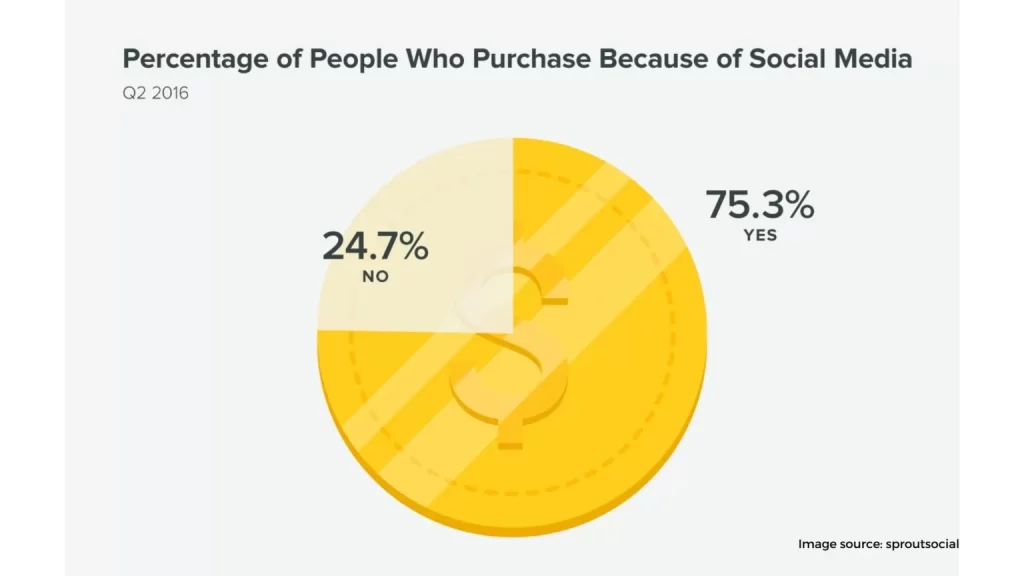
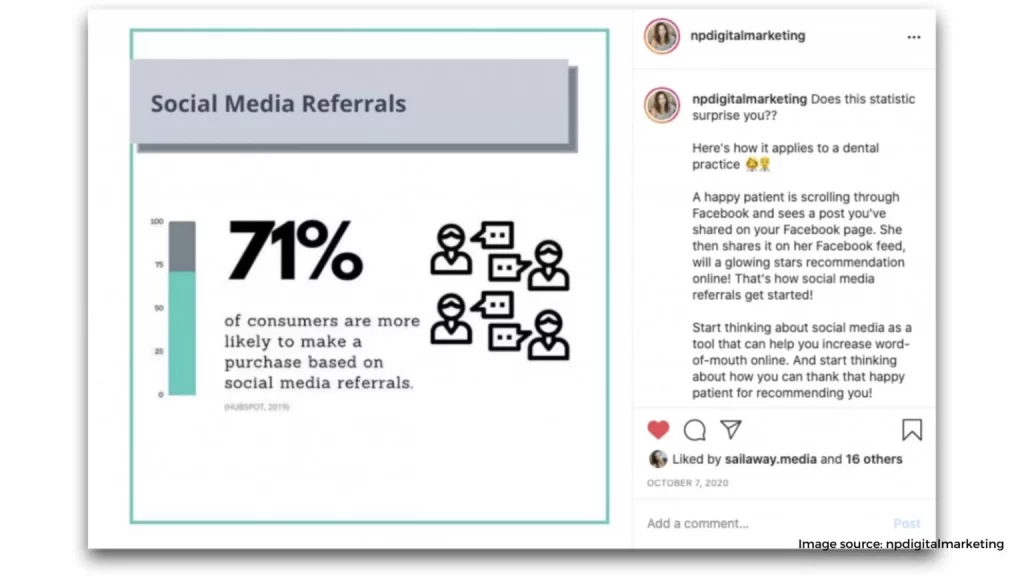
In fact, 75% of respondents admitted to purchasing a product or service because they saw it on social media. If you use social media and post things that address your clients' questions, you can become a more credible alternative for them.
3. Showcase Your Leadership
Finally, the viral nature of social media enables information about your business to quickly spread. You may begin to exhibit thought leadership by creating articles, filming videos, and distributing information that demonstrates your knowledge. For example, Imperial Dental promotes trust by showcasing experience and professionalism by sharing industry news on social media.
It's difficult to trust businesses, but when you have evidence to support your claims, it makes all the difference. That's why becoming a leader in the dental industry and showcasing it on social media not only attracts new patients, but also piques the interest of peers in your field.
Best Social Media Platforms for Dentist
Now that we've covered the significance of social, it's time to figure out where you'll launch your campaign. There are a plethora of platforms on the market, and each one has the capacity to entice new patients. Some social networks, on the other hand, are better suited to dentists than others. Let's look at the major networks and see which one works best for you.
Facebook
Every day, millions of people visit Facebook, making it one of the most widespread platforms for dentists. You may use Facebook advertising to get a better understanding of client personalities and audience types, however you must first learn how to create exceptional customer personas and audience groups. Check out our tutorial below to get you started on a social media advertising campaign.
Because Facebook is a personal social network used by family and friends, it's critical to understand and work with the Facebook algorithm. Use Facebook to develop strong, long-term connections with your audience by attempting one of these methods:
Sharing photos of your staff and customers, as well as any joyful clients
Linking to blog articles and news stories about your area
Providing practice updates, as well as soliciting client opinions
Running contests and special offers
Displaying a patient or team member from the previous month
Taking part in Facebook Live Q&A events
Providing dental advice and assisting with customer questions
YouTube
Channels with a focus on imagery and video are frequently an obvious choice for dentists since they often rely on the visual appeal of their work to attract patients. With YouTube, dentists may use videos to help them develop a greater level of trust among their followers:
Q&A sessions or team interviews
Office tours
Patient testimonials
Dental tips
Demonstrations
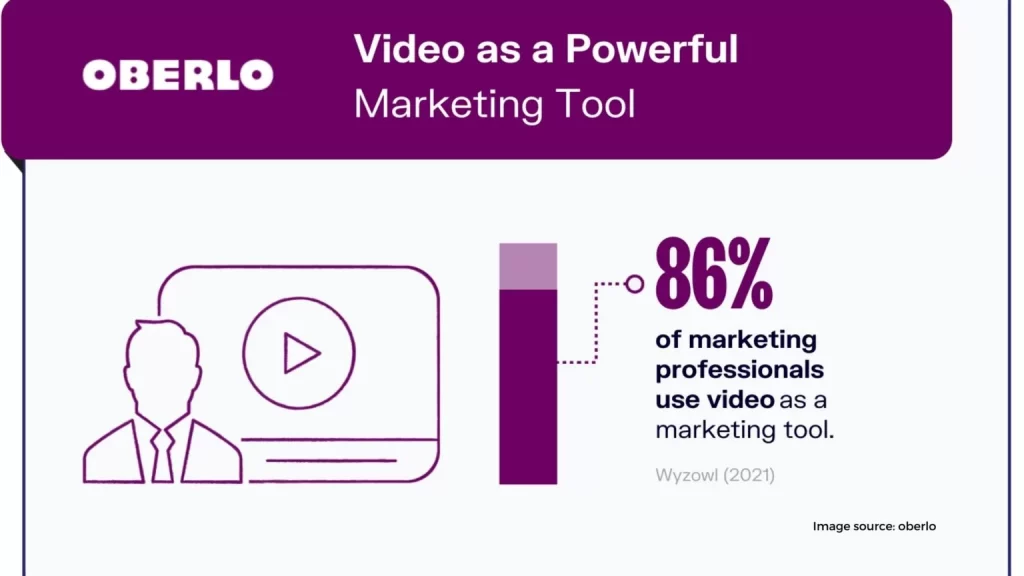
Educational and amusing video information will help you develop a relationship of trust with your target audience. Video-based businesses receive 41 percent more web traffic than non-video companies.
Twitter
Dentists can also take advantage of social media sites like Facebook and Twitter to expand their customer base. It has a similar client base to Facebook. The difference is that you'll post shorter, more focused messages on Twitter than on Facebook. When utilizing Twitter as a marketing tool for your dental advertisements, branded hashtag targeting is beneficial. Here are some examples of how to use Twitter as a marketing tool for your dental business:
Use hashtags that are relevant to your field, such as #TeethWhitening, to draw attention
Sharing content from industry peers on social media is a good idea
Live-tweeting dental conferences is a great way to get the word out
Responding to inquiries and concerns about dental treatment is an excellent method of public relations
Customer service queries should be handled
Instagram
What do you think your patients' first place to display their beautiful smiles after you've finished photographing them? Instagram is the ideal platform for showing off the confidence-boosting visual aspect of your practice, particularly if you specialize in cosmetic dentistry. Keep in mind that too many filters can make a photo look amateurish. Here are some examples of what dentists on Instagram might utilize:
Behind-the-scenes photos Reposting shots taken in the patient's office of before and after pictures (with patient consent)
Promoting events
Organizing competitions for #BestSmile or similar activities
Running contests based on branded hashtags
Social Media Secrets for Dentists: Best Practices
It's time to finish your social strategy once you've decided where to campaign. We'll say it again, but knowing your target audience is the secret to any outstanding marketing effort.
Consider your USP, what you can provide to your clients, and the types of consumers you want to attract when developing user personas. Building user personas will assist you in determining not just where you should start your social media campaign, but also what sort of content you should offer.
Last but not least, don't forget to use these last recommendations to increase awareness and secure your campaign:
1. Make the Most of Employee Advocacy
It makes perfect sense to tap into the influence of the individuals your patients interact with most: you. Your staff members reside in the same communities as your potential patients, they like your clinic and know how to contact them.
Using tools to manage and submit content on their own personal social networks lets your staff create and publish material on their own terms. This allows you to reach a larger audience while still providing your practice with a human element that your patients desire.
2. Be Personal, Not Clinical
Remember, your goal is to persuade clients that you provide a polished and pleasant experience. With this in mind, avoid being too clinical with your postings. Showing dramatic before and after photos that highlight your patients' experiences is a fantastic method to add a personal touch to your campaigns. Ideally, your patient will show pictures to you and you'll simply retweet or regram them.
Also, a strange joke or meme might go a long way toward demonstrating that you're more than simply a teeth-cleaning machine to your consumers.
3. Share Engaging & Valuable Content
People come to dentists looking for everything they need to have a fantastic smile. This implies they want goods and services that will help them maintain their oral health, but it also implies that they want to learn what else they can do to avoid tooth problems. Give useful dental hygiene advice when posting on social media in order to demonstrate your expertise.
People who like what you have to say will be more inclined to share it with their friends and family if they find it helpful. As a result, your dental practice will get more activity.
According to a recent poll, 49% of respondents said they share content because they believe it is both educational and useful to others. You may also use content to demonstrate your industry expertise.
4. Engage With Your Audience
One of the most vital things to keep in mind when it comes to social media is that it's all about connecting with your target audience. You don't simply want to provide information for potential patients; you want to entice them to respond by posting material that gets them to click, comment, or share.
One of the most effective strategies to get your audience involved is to ask a question. Giving their thoughts on important issues is highly appreciated by people. Pose inquiries that are relevant to your patients' oral health habits, and urge them to join in with a compelling call to action.
5. Make the Most of Live Video
Dentists may use online reviews, in addition to SEO and PPC marketing, to attract new patients. Around 90% of consumers are persuaded to buy goods or services after reading online reviews. The more testimonies you receive from happy patients, the more likely new clients are to feel confident in their decision to visit your practice.
If you're having problems getting started, try offering discounts on office visits and dental hygiene goods or other things for people who provide feedback.
Using Social Media Marketing for Dentists
Like any marketing approach, there is no one-size-fits-all solution to be successful in the social media world as a dentist. However, if you can grasp the importance of developing a connection with your audience through social media, you may begin to build a brand that is more credible, trustworthy, and attractive for today's patients.
You'll look forward to an army of delighted patients who don't dread going to the dentist if you can show them that they can trust you.
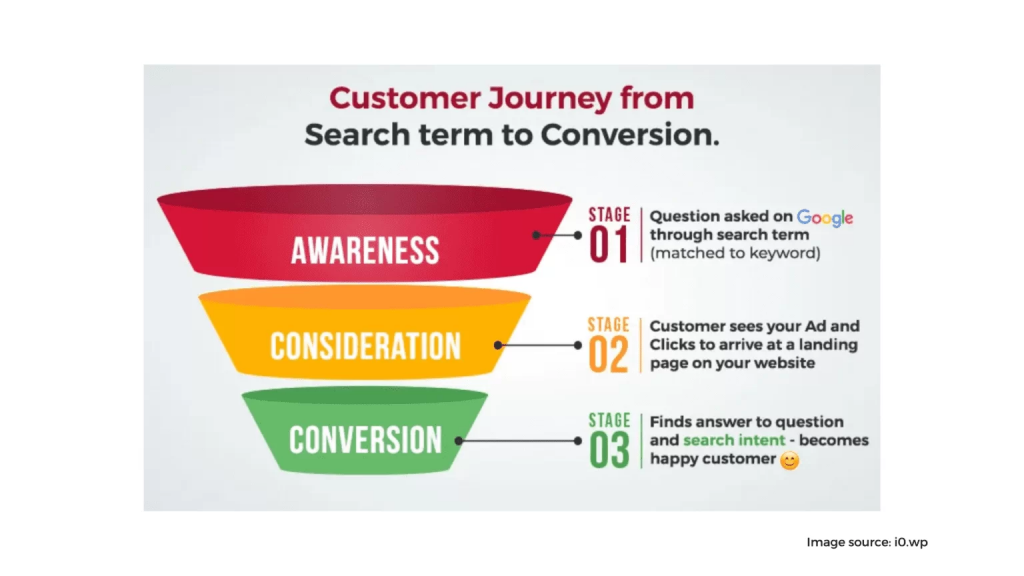
When searching for something, how often do you say to yourself, "I'll Google it later?" For me, it's a common occurrence. I just searched on Google something right now - how many Google searches are there daily? Do you want to know the solution?... Google it.
What does this signify for your construction firm? This is a massive potential for you. Your building company's services are not immune to this mentality. When someone is seeking a local contractor or remodeling services, there's a good chance they're searching Google for the best service business that meets their needs. Naturally, you aim to be among the top businesses. So, how do you get your building discovered on Google? Following are some suggestions for getting your construction firm's website to appear when a prospective customer is searching for something you provide.
Develop a user-friendly website
This is the first step. You may have created a Yellow Pages listing, a Yelp page, or worked with listing agencies in the past. While these strategies were influential in the past, they are no longer relevant for searching for a local business. To acquire organic traffic and get your construction company recognized on Google nowadays, you must establish a website. If you're not sure where to start, you should continue to submit your construction business with all of those listing agencies; however, to get the results that you want and deserve, you'll need a website that you can manage and one that will correctly display the work that you do.
Whether you already have a fantastic site or are creating one, it must be user-friendly. There are numerous elements to a user-friendly website, such as good flow, eye-catching design, mobile compatibility, and so on; however, the most significant is speed. Google has repeated time and time that speed is among
Make your business more identifiable
To gain exposure, enter your location's business name, address, and phone number on several website listings. Although this may assist you in gaining exposure on other sites, the main reason to do so is to demonstrate to Google that your company's name, address, and phone number are listed in the same manner across many sites. Next, create or obtain a Google Business Profile. Finally, add and control how your company data appears on Google Verify to ensure your business is included in the program.
There is a faster, less effective way to do this for free. The easy method is to manually submit your business data to numerous websites and directories. Yelp, the Better Business Bureau, Foursquare, and other popular sites are among them. To discover additional locations, continue looking at Google for "service type" + directories.
Investigate what your consumers are searching for
Having a clear idea of what your ideal consumers are searching for is crucial before diving into your website or metadata and changing the content. Once you have this knowledge, you'll have guidance on what sort of material to change and generate. There are a few distinct strategies to determine what keywords your consumers use. The first is very simple and does not require much effort. Then, when you begin typing a word or phrase into the search bar, Google will provide you with suggestions.
The second approach is very similar to the first. You'll see "Searches related to construction companies near me" after inputting your search term or phrase. In this example, searches relating to the word "construction companies near me" are displayed.
There are numerous tools, both paid and free, that you may use to conduct your study. We like the Google Keyword Planner. You get insight into how popular keywords are in the Google Keyword Planner, which is a little more complex and has some moving parts than other keyword planners.
You may start optimizing your site once you've done your homework and understand what keywords and phrases your ideal consumers are looking for.
Make sure you use the proper header tags
You've done your homework, and it's time to build your website. The next step is to make sure that your website is correctly using the relevant heading tags based on what you learned in your research. On each page of your website, there should only be one H1 tag. There is presently a debate about whether or not you should utilize it. The H1 tag is the page's most important header and informs Google about your topic. Consider this to be the book's title. For example, if you've discovered that your ideal customers are looking for "home remodeling contractors," you'll want a website page with the H1 tag of "home remodeling contractor." Doesn't it seem simple?
You can include H2 tags once you've given your site a title. The H2 tags are similar to book chapters. You may add as many H2s as necessary to effectively describe the content of your page. Using the "home remodeling contractor" for example as an H1, an effective H2 would be something about home remodeling,
The heading tags are crucial, but what's even more essential is creating useful material under each one. But, of course, you already know what they say: "Content is the king."
Select your service area
You'll notice that the phrases you looked up all had a suggestion that ended with "near me." This is because when individuals do Google searches for these kinds of services, they usually want to know what's available in their neighborhood. Given that your construction firm operates in a particular geographic location, you may use this.
As you create the material on your site, include areas where you want to work. List the locations you service on your "home remodeling contractor" page. If your objective is to serve customers in New Hampshire and Maine's Seacoast region, mention it on the page.
Regarding meta title tags, the region in which you'll provide your service is also something that should be considered. The meta title tag is what appears in Google when people conduct a search on Google for your business. Take a look at the following example. Your firm's location will determine its success.
The more popular areas of your neighborhood tend to have a higher concentration of businesses and services, so you'll want to ensure yours is on the first page or two. Another thing that can assist with this is registering your company with Google My Business. There are several advantages to creating a business account with Google My Business.
Pro tip:
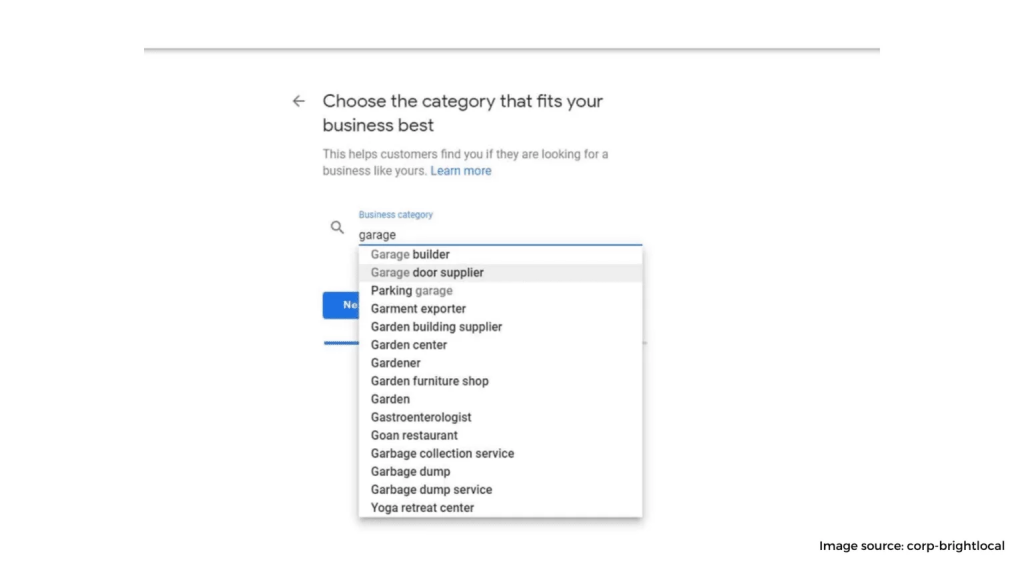
In the "Business category" box, type a term that best describes your company. When Google decides when to show your business listing to people looking for the services you provide, this is how it works.
Showcase your area of expertise
We'll dig a little deeper into the meta title tag. You should use the tag as an opportunity to advertise your areas of expertise, in addition to incorporating your service area into the meta title tag. Every page will have its meta title tag. The tag should represent the material on that particular page, your service area (as previously said), and include your company name for branding reasons. The meta title tag should describe the business category in short.
As a result, the page titled "home remodeling contractor" should also contain "home remodeling." It's not straightforward to create meta title tags every time. In particular, you're only allowed to utilize 60 characters in a meta title tag. If the meta title is longer than 60 characters, Google will truncate it.
To optimize further, use Google Analytics
The Search Engine Optimization (SEO ) world is constantly evolving. Therefore you'll need a method to monitor your outcomes and see if your efforts are paying off. We strongly advise using Google Analytics. Google Analytics is a free tool that allows you to see what people are going to your website and how they get there.
You'll also need to download and install the Google Analytics application for your web browser. You can get started with Google Search Console in addition to Google Analytics if you haven't already. The specific keywords you rank for will not show up in Google Analytics, but they will show up in the Google Search Console.
Conclusion
There you have it. Here are a few ways to increase the likelihood that your potential customers will find your construction firm on Google. In this study, we looked at the usage of Google Maps for both brick-and-mortar spots and contractors. While more individuals are conducting early research on their mobile devices, we discovered that searches in the Google Maps app are more significant for buildings than they are for contractors.
These aren't the only strategies available; there are many more, but they'll get you started. Keep in mind that optimizing your website for Google is a long-term, scalable strategy. There is no instant solution to having your website rank first in all searches (trust me, I've been looking for a while), but once you've made these efforts, your company will be in a far better position to start generating organic growth.
However, locating the ideal investment hotspots—areas with significant development potential—is the key to seizing these possibilities. This not only maximizes returns but also minimizes risks associated with real estate investments.
In this in-depth examination, we will examine the best places in the United States for real estate investment, offering valuable insights into the economic trends, demographic shifts, and market dynamics that make these regions stand out.
Our goal is to provide a detailed roadmap for investors, highlighting the most lucrative areas in the U.S. real estate market. From tech hubs like Austin and Raleigh-Durham to vibrant cities like Nashville and Phoenix, we will explore what makes these locations prime for investment. Additionally, we will touch upon emerging hotspots such as Boise and Charlotte, which are rapidly gaining attention for their growth potential.
By the end of this analysis, you will have a clear understanding of where to focus your real estate investments and how data-driven strategies can aid in your investment journey. Whether you are new to the real estate industry or a seasoned investor, this guide will give you the information and resources you need to succeed in the competitive U.S. real estate market.
Criteria for Identifying Investment Hotspots
When evaluating potential real estate investment hotspots, a thorough analysis of several key criteria is essential. These criteria help investors identify regions with the highest growth potential and minimize associated risks. Here's a closer look at these critical factors:
1. Economic Growth Indicators
The foundation of any solid real estate market is a strong economy. Key indicators such as GDP growth and job creation rates signal a region's economic health and its capacity for sustainable expansion. A growing economy attracts businesses and residents, boosting demand for real estate. For instance, cities like Austin and Raleigh-Durham have shown impressive economic growth, making them prime investment locations. Understanding these economic indicators is crucial, as they help investors gauge the economic vitality of a region and its potential for long-term real estate appreciation.
A growing population indicates increased demand for housing. Understanding demographic trends, such as age distribution and household income, helps investors target markets with high demand for specific types of properties. Younger populations might prefer urban apartments, while older demographics might lean towards suburban homes. Regions experiencing significant population influxes, like Phoenix and Nashville, are beautiful. Long-term effects on real estate patterns can also be caused by changes in the population, such as baby boomers retiring.
3. Infrastructure Development
Infrastructure is a critical factor in enhancing a location's appeal. Well-developed transportation networks, quality public amenities, and ongoing infrastructure projects can significantly boost property values. Areas with new or improved infrastructure, such as Orlando's extensive transportation projects, become more accessible and livable, driving up real estate demand. Infrastructure improvements can turn previously overlooked areas into prime investment opportunities by enhancing connectivity and livability.
4. Employment Opportunities
Job availability is a major draw for residents. Regions with diverse and burgeoning industries, particularly in technology, healthcare, and finance, attract a steady stream of professionals. These employment hubs not only bring in new residents but also ensure a stable economic environment conducive to real estate investment. For example, Nashville's growing healthcare sector has spurred significant interest in its real estate market. By tracking job market trends and identifying areas with robust employment growth, investors can pinpoint regions with high real estate demand and potential for rental income.
5. Real Estate Market Trends
Understanding current market trends, such as price appreciation and rental yields, provides a comprehensive view of an area's investment potential. High price appreciation indicates strong demand and future profitability, while attractive rental yields ensure steady income streams for investors. By analyzing market data, investors can make informed decisions and strategically position their investments for maximum returns.
Data-driven strategies help investors pinpoint the most lucrative real estate markets by leveraging these criteria. The goal is to provide investors with the insights they need to make informed decisions and ensure their investments yield maximum returns.
Austin, Texas
Austin stands out as a prime investment hotspot due to its robust economic and population growth. The city's tech industry boom, driven by major companies like Apple, Tesla, and Google, has attracted a young, affluent demographic eager for housing. This influx of high-income workers has pushed property values higher, making Austin one of the top real estate markets in the U.S. for long-term appreciation and strong rental yields. Despite some market corrections, Austin's real estate market remains resilient and continues to attract investors.
To know more about Austin, read the below article.
Known for its thriving music scene and growing healthcare industry, Nashville has become a magnet for tourists and new residents. The city's diverse economy and steady job market contribute to its real estate market's resilience. Nashville's strategic location and high standard of living continues to draw newcomers regularly, driving demand for housing and real estate investments.
To know more about Nashville, read the below article.
The Research Triangle, encompassing Raleigh, Durham, and Chapel Hill, is renowned for its prestigious educational institutions and thriving tech companies. This region's high quality of life and ample job opportunities attract a well-educated workforce. Market analysis tools identify Raleigh-Durham as a hotspot with significant growth potential, offering investors a balanced mix of residential and commercial property opportunities.
Phoenix, Arizona
Phoenix is a well-liked location for seniors and young people due to its pleasant weather and reasonably priced living expenses. The city's robust in-migration and economic diversification have propelled the real estate market's impressive expansion and durability. Key sectors such as healthcare, education, and manufacturing contribute to Phoenix's robust job market.
Orlando, Florida
Orlando's status as a global tourist destination and its expanding tech and healthcare sectors create a dynamic real estate market. The city's ongoing infrastructure projects, such as expanding its transportation networks and continuous population growth, further enhance its attractiveness to investors.
Emerging Hotspots to Watch
Boise, Idaho
Boise has emerged as a surprising hotspot, offering a high quality of life and a rapidly growing job market. The city's affordable housing and strong community appeal attract both families and young professionals. Market insights suggest that Boise's real estate market is poised for substantial growth, presenting a unique opportunity for early investors. Boise's welcoming community and lower cost of living make it an attractive option for people looking to relocate. The steady increase in job opportunities, particularly in the tech sector, adds to its appeal.
Charlotte, North Carolina
Charlotte's financial sector and growing tech industry contribute to its robust economic landscape. The city's real estate market benefits from steady population growth and infrastructure improvements. Comprehensive market analysis tools highlight Charlotte as an emerging hotspot with significant investment potential. The continuous influx of new residents, driven by job opportunities in finance and technology, boosts demand for housing. Additionally, ongoing projects to improve public transport and amenities enhance the city's livability.
Factors Driving Growth in These Hotspots
Several factors drive growth in the identified real estate hotspots. Here's a simple breakdown of these key drivers and how they contribute to the booming real estate markets:
1. Technology and Innovation Hubs
Technology and innovation hubs attract high-paying jobs and skilled workers, which boosts the local economy and increases demand for housing. Cities with a strong tech presence, like Austin and Raleigh-Durham, see significant real estate growth because tech companies create numerous job opportunities. This influx of well-paid professionals leads to higher demand for both residential and commercial properties.
2. Educational Institutions and Research Centers
Areas with prominent universities and research centers, such as Raleigh-Durham, attract a knowledgeable and entrepreneurial population. These institutions not only bring students but also educators and researchers who contribute to the local economy and demand for housing. The presence of top-tier educational facilities makes these regions attractive for long-term investments.
3. Transportation and Infrastructure Projects
Investment in transportation and infrastructure, such as new highways, public transport systems, and commercial developments, significantly boosts real estate growth. Improved connectivity makes these areas more accessible and livable, attracting more residents and businesses. For example, cities like Charlotte and Phoenix have grown substantially due to ongoing infrastructure improvements.
4. Lifestyle and Cultural Attractions
Cities with vibrant cultural scenes, entertainment venues, and recreational facilities offer a high quality of life, which attracts new residents. These lifestyle amenities are a major draw for young professionals and families looking for a balanced work-life environment. For instance, Nashville's music scene and Orlando's entertainment parks are key factors driving their real estate markets.
5. Economic Growth and Job Opportunities
Strong economic growth and diverse job opportunities in sectors like finance, healthcare, and technology attract people to these cities. This consistent inflow of newcomers raises the demand for housing and property values. Cities with robust job markets, such as Charlotte and Phoenix, benefit greatly from this trend.
Risks and Challenges
Investing in real estate hotspots can come with its own set of risks. Here are some simple explanations for these challenges:
Market Volatility and Economic Downturns
Due to changes in the economy, property values and rental demand can go up and down. For example, if there's a recession, people might not be able to afford as many houses or rent expensive properties.
Overdevelopment and Housing Affordability
In areas growing quickly, too many new buildings can be constructed, leading to too much supply. This can cause housing prices to drop, making it harder to sell reasonably priced properties. Additionally, as demand increases, housing may become too expensive for many people, leading to affordability issues.
Regulatory and Zoning Changes
Local governments can change the rules about how land can be used. This can affect your property, such as limiting what you can build or requiring expensive changes to comply with new regulations.
Environmental and Climate-related Risks
Properties can be at risk from natural disasters like floods, hurricanes, or wildfires. Climate change can make these events more common and severe, impacting property values and the cost of insurance.
Investment Strategies for Hotspots
Investors can use different strategies to get the best returns from real estate hotspots. Here are some simple ways to do that:
1. Long-Term Investments in Residential Properties
Buying homes to rent out or hold onto for many years can be a good strategy. Over time, these properties usually go up in value (this is called appreciation) and can also bring in regular rental income.
Example: You buy a house in a growing city and rent it out to tenants. Over time, as the city grows, the property value increases, and you earn a steady rental income.
2. Short-Term Investments in Commercial Properties
Investing in shops, offices, or other commercial buildings can quickly yield big profits. This can be done by buying properties, improving them, and selling them for a higher price (known as buy-and-hold or flipping).
Example: Buying an old office building, renovating it, and then selling it at a higher price can yield a significant profit in a short amount of time.
3. Diversification
Spreading your investments among different types of properties (like residential and commercial) and in different locations can reduce your risk. If one area or type of property doesn't do well, you might still make money from others.
Example: Investing in a mix of apartments, houses, and office spaces in various cities. If the market in one city drops, you may still have profitable investments in other cities.
4. Leveraging Local Market Knowledge and Partnerships
Knowing the local market well and working with local experts can greatly increase your chances of success. Local partners can assist you in locating the greatest offers and provide insightful information.
Example: Partnering with local real estate agents or property managers who know the best neighborhoods and have connections in the community.
Investing in real estate hotspots can bring great returns, but it requires understanding how the market works and what drives growth. The cities we've discussed—Austin, Nashville, Raleigh-Durham, Phoenix, and Orlando—along with emerging markets like Boise and Charlotte all show strong potential for profitable investments. The potential for high returns in these cities is significant due to their robust economic growth, increasing populations, and strong job markets. These variables create a great demand for homes, which raises property values and strengthens rental revenue.
Advanced tools and strategic marketing solutions help investors make informed decisions. By analyzing market trends and growth drivers, these tools provide valuable insights that help investors choose the best opportunities. This allows investors to navigate the complexities of the real estate market more effectively. With expertise, investors can confidently explore these promising markets and achieve sustainable growth. Understanding the risks and opportunities makes investing and seeing substantial returns easier.
By leveraging these insights, you can capitalize on the booming real estate markets in these hotspots, making sure that your investments are profitable and secure.