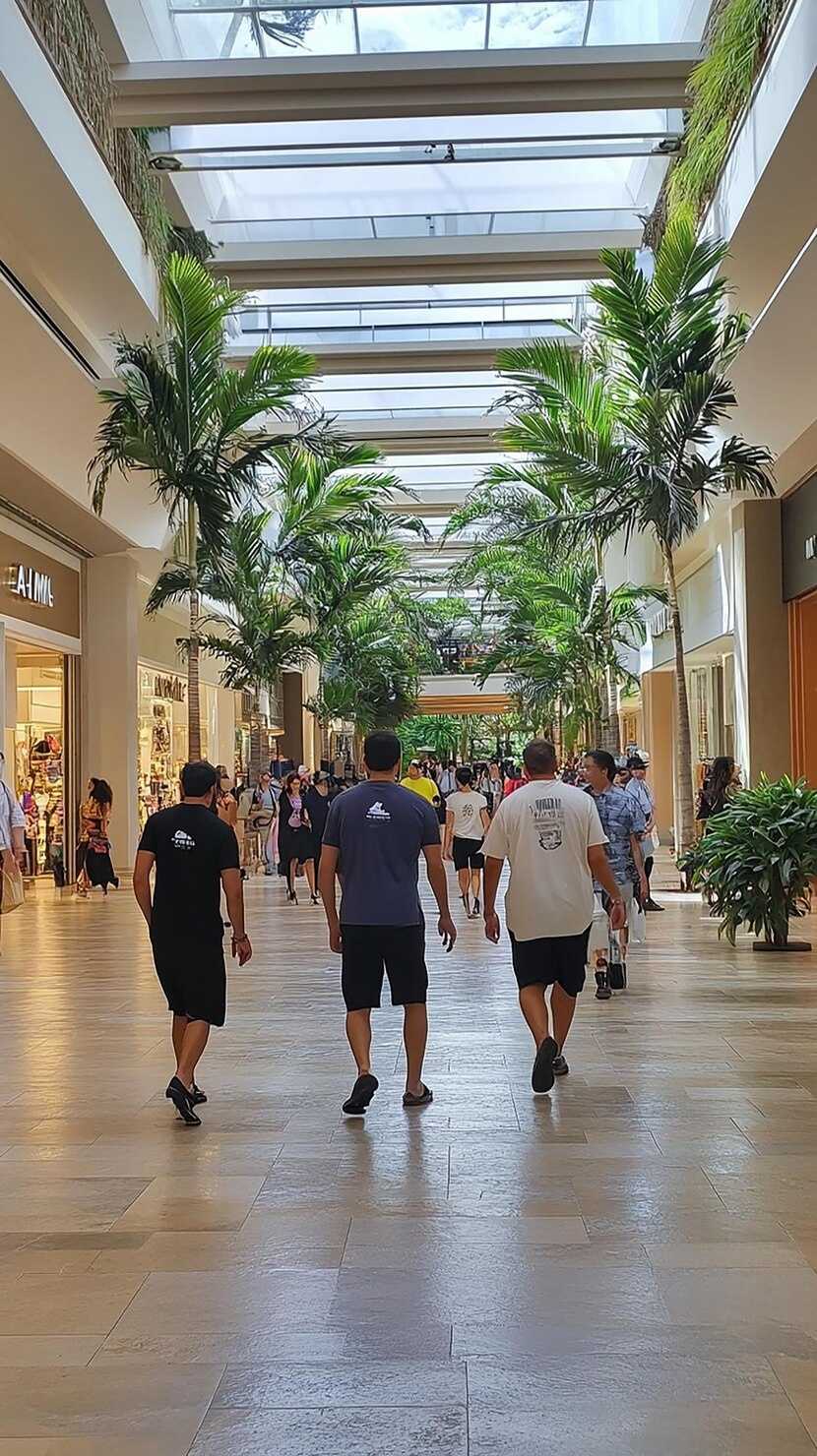
Dubai Mall received more than 111 million visitors in 2024 and the number is expected to climb further through 2025 and 2026, making it the most visited retail destination on the planet by a significant margin. For a brand operating multiple outlets across its 1,200 stores, that footfall is simultaneously the greatest opportunity and the greatest challenge in local reputation management.
Every one of those visitors is a potential reviewer. The question is not whether they will form an opinion about your outlet while they are inside it. It is whether your frontline staff give them a reason to share that opinion publicly before they move on to the next floor, the next attraction or the next destination on a packed itinerary.

The Dubai Mall customer base is genuinely international, with tourists arriving from Europe, South Asia, East Asia, the GCC and beyond, requiring multilingual staff who can identify the right moment for a review in the language and cultural register that the customer actually responds to.
Google's April 2026 policy banning on-premises review requests, shared device kiosks and review quotas eliminates the most common shortcuts and makes staff-driven, post-visit WhatsApp links the only compliant and high-converting channel for review generation in a mall environment.
A centralised platform that gives each staff member a personalised review link, surfaces incoming reviews in real time and enforces response SLAs is the infrastructure that turns a high-footfall environment's natural review potential into a structured, governable channel rather than a missed opportunity that compounds daily.
A multi-location retail brand operating outside a destination mall has a relatively predictable customer profile: local residents with an ongoing relationship with the brand who are likely to return, whose preferred communication channel is knowable and whose review request can be timed around a post-visit follow-up. Dubai Mall changes almost every one of those assumptions simultaneously.
The customer your staff member just served may be leaving for the airport in three hours. They are equally likely to be a UAE resident from Abu Dhabi who drove in for the afternoon, a Russian tourist on their fifth Dubai visit, a South Asian family who treats the mall as a destination in itself, or a Chinese tourist whose entire retail experience will be reviewed on a platform that Google Business Profile has no relationship with at all. The window for capturing their experience as a review is not the following morning when an automated SMS fires. It is the 15 minutes after the transaction while they are still in the building or the hour after they leave while the experience is still fresh enough to motivate the effort of writing it down.
A review request sent within 24 hours of a positive service interaction via WhatsApp with a direct link generates a response rate four to six times higher than a generic email sent a week later, and in the context of a tourist who may be checking out of their hotel tomorrow, that 24-hour window is generous. The real window for a Dubai Mall retail transaction is the same day, and the only channel that reliably captures it is a WhatsApp message sent by a staff member the customer already has a warm feeling toward, in the minutes immediately following a positive interaction.


Dubai Mall's frontline retail staff are already required to be multilingual. Fluent English is mandatory across virtually all customer-facing roles, with Arabic, Russian, Mandarin or German representing additional hiring triggers because the primary tourist demographics demand service in their own language. That linguistic capability, which brands have invested in at the hiring stage, is the most underused asset in their review generation programme.
A staff member who just helped a Russian-speaking customer find the right size in three minutes and sent them away feeling genuinely well-served has built the relational warmth that makes a review ask land naturally rather than feel transactional. If that staff member sends a WhatsApp message in Russian, with a direct link to the location's Google Business Profile, within the same hour, the conversion from satisfied customer to published review is dramatically higher than any automated follow-up sequence a central marketing team can engineer. UAE nationals and Arab expatriates trust brands more when they communicate in Arabic, and the same principle applies across every language group that moves through Dubai Mall's floor space every week.
The practice that most mall retail brands have been relying on for review generation, which is a tablet at the till, a QR code at the counter or a verbal ask before the transaction closes, was formally banned in Google's April 2026 policy update. Google now prohibits asking for reviews while the customer is still on the premises, using shared devices for review collection and setting staff review quotas, and enforcement is being run through Gemini-powered moderation that is actively removing non-compliant reviews and flagging profiles without warning the businesses affected.
In a mall environment specifically, the on-premises prohibition matters because the temptation to capture a review before a tourist customer disappears forever is exactly the kind of pressure that leads to the shared-tablet approach. A tourist who is leaving Dubai in 24 hours feels like a disappearing review opportunity, and the instinctive response is to try to capture it immediately while they are still standing in the store. That instinct is understandable and it is also now a Google policy violation that can result in years of review history being removed from the outlet's profile overnight.
The compliant approach, a personalised WhatsApp link sent by the staff member who served them immediately after they leave the store, is actually better suited to the tourist customer dynamic than an on-premises request, because it reaches them while they are still in the mall, still in the experiential high that a great retail interaction creates and still on a device they own and control. Amplispot's platform makes this frictionless at scale, with each team member's link pre-configured and ready to send the moment the customer walks out, rather than dependent on a manager finding the right URL or a staff member remembering a process they were briefed on six weeks ago.


A brand with four outlets across Dubai Mall, Mall of the Emirates and two community malls is managing four separate Google Business Profiles, four separate incoming review streams, four separate sets of staff who may or may not be making the ask, and four separate rating trajectories that determine whether each outlet appears in local search results for customers planning their next visit. Only about 5% of businesses consistently respond to their online reviews, which means the overwhelming majority of reviews arriving at each outlet are sitting unanswered while the staff members who could respond with specific, contextual knowledge of what happened are focused on serving the next customer.
Businesses that respond to reviews earn up to 18% more revenue than those that do not, and 45% of consumers are more likely to visit a business after seeing it respond thoughtfully to a negative review. For a brand whose next customer may be reading reviews to decide between two adjacent outlets in the same mall, the response behaviour at each location is a live sales conversation that is happening publicly every day regardless of whether anyone from the brand is participating in it.