logo-Amplispot
Cutting a 6-Week Rollout to 3 Days

From Product Launch
to Agent-Ready 

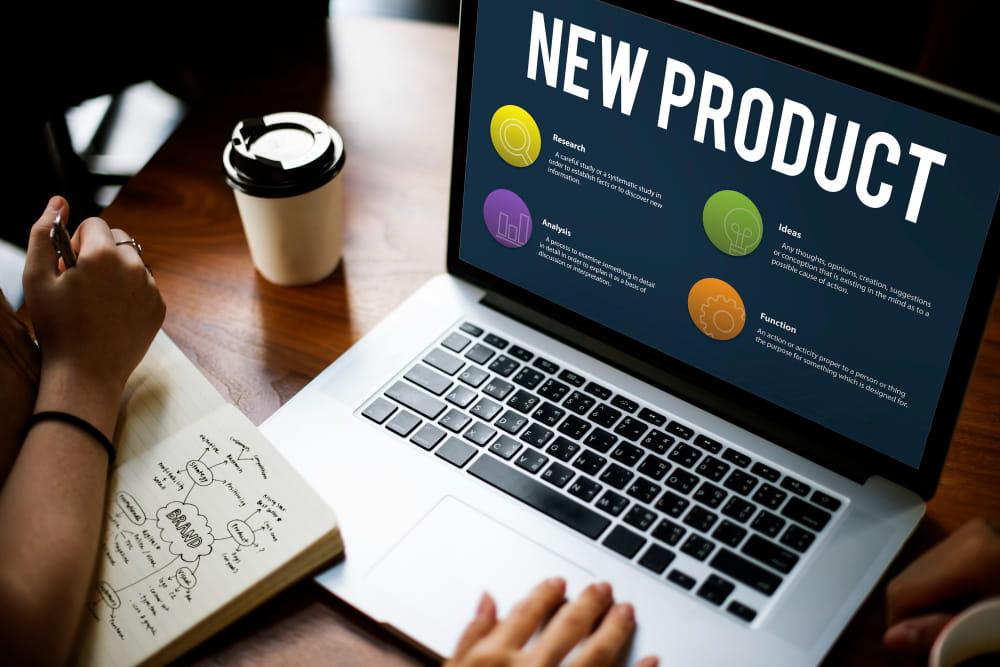
A new insurance product may be ready for the market, supported by a strong customer need, clear benefits and a well-planned launch campaign. Yet the product cannot create results until agents understand it well enough to explain it with confidence. This is where many product launches lose momentum.
agent-ready product launch
0

Individual life insurance agents in India as of March 31, 2025

0

New agents appointed during the year

0

Agents terminated during the same year

0

Time to first rollout after approval

Where Product Launches Lose Momentum

Why Does Product Training
Take Six Weeks?

The approved product document moves to the training team. The training team creates a presentation. Regional trainers review it. Translations are prepared. Sessions are scheduled across different branches. Agents attend in batches and follow-up questions are sent back to the product team.

None of these steps appears unusually slow on its own. Together, they can turn a product launch into a six-week training rollout. By the time the last group of agents is ready, the launch is no longer new and the first few weeks of sales opportunity have already passed.

A traditional rollout often depends on several teams completing their work one after another. Product teams wait for compliance approval. Training teams wait for the final presentation. Regional teams wait for trainer availability and agents wait for the next scheduled session.
coordinating a multi-branch training rollout
A typical six-week rollout may look like this:
Week
Traditional Rollout Activity
Week 1
Final product documents are shared with the training team
Week 2
Training presentation and facilitator notes are prepared
Week 3
Content is reviewed, corrected and translated
Week 4
Trainers are briefed and regional sessions are scheduled
Week 5
The first batches of agents complete the training
Week 6
Remaining batches attend and missed sessions are repeated
According to the IRDAI Annual Report 2024-25, India's life insurance sector had 31.23 lakh individual agents as of March 31, 2025. During the year, 11.15 lakh agents were appointed and 8.87 lakh were terminated. This level of movement means insurers are not only training existing agents. They are continuously preparing new agents as well. When training depends mainly on scheduled sessions, every product launch creates another large coordination exercise.
The 3-Day Rollout Model

Three Days Does Not Mean Skipping Important Work

Reducing the rollout from six weeks to three days does not mean removing compliance reviews, product approvals or quality checks. Those steps must remain. The time saving begins after the source material has been approved.

Instead of converting the product document into a long training presentation and delivering it repeatedly, the central team can turn the approved information into a short digital learning path. The content can then be released to the complete agent network at the same time.

A three-day rollout could follow this structure:
Day 1
Build the Agent Learning Path
The product team shares the final approved document, customer profile, key benefits, important conditions and common sales questions.
The training team divides the material into focused topics such as:

- What does the product offer?
- Which customers may find it relevant?
- How do the important benefits work?
- What must the agent explain clearly?
- Which conditions cannot be missed?
- How to answer common objections?
- What action should the agent take next?
Day 2
Create and Approve the Content
Each topic can be converted into a short video, visual explainer, role-play scenario or knowledge check.

A product introduction may take two minutes. A beneficial explanation may take 60 seconds. A customer objection can be demonstrated through a short conversation between an agent and a prospect. This format makes training easier to review because each module has one clear purpose. The product and compliance teams can check the script against the approved document without reviewing a long classroom recording.
Day 3
Release, Test and Track
Once the content is approved, it can be released to all eligible agents through a mobile-friendly learning platform.

The agent receives the product introduction, completes the short modules and answers a few questions. Managers can see who has started, who has completed the learning and which questions are causing difficulty.
Research based on 6.9 million video-watching sessions across four edX courses found that shorter videos were more engaging. The researchers recommended dividing instructional videos into segments shorter than six minutes. The same idea works well for product training. Agents are more likely to revisit a two-minute explanation before a customer meeting than search through a recording of a two-hour session.
The Comparison

Six Weeks vs. Three Days

The difference between the two models is not simply the number of days. It is the way work moves between teams.
Launch Requirement
Six-Week Model
Three-Day Digital Model
Training material
Long presentation and trainer notes
Short role-based modules
Delivery
Multiple scheduled batches
One central release
Trainer dependency
High
Limited
Agent availability
Fixed session time
Flexible access
Language versions
Separate sessions or presentations
Centrally created versions
Missed training
Another session must be arranged
Module remains available
Content update
Trainers must be briefed again
Central module is updated
Readiness measurement
Attendance
Completion and knowledge checks
Launch consistency
May vary by trainer or region
Same approved message for everyone
Time to first rollout
Several weeks
As little as three days after approval
Beyond Completion

Agent-Ready Means More Than Training Completed

A product launch is not successful because an agent attended a session. The agent should be able to identify the right customer, explain the product correctly and respond to basic questions without guessing. This is why training should be built around real customer conversations rather than the order of sections in the product brochure.

For example, an agent-ready learning path may ask:
Who is the product designed for?
Which customer need does it address?
How should the first conversation begin?
Where can the agent find full product details?
What question is the customer likely to ask?
Which condition requires special attention?
Which three benefits should be explained first?
A study of 438 top-performing life insurance agents highlighted the need to design training based on factors such as agent age, education and experience. The study also discussed the possible role of AI in building more effective learning journeys. This suggests that one long presentation may not be the best experience for every agent. A new agent may need a basic explanation and guided examples, while an experienced agent may need a product comparison and objection-handling module.
The Complete Reference

Keep the Full Product
Document Available

Short training does not replace detailed product material. The product brochure, policy wording, benefit illustration and compliance documents should remain available as the complete source of information. Short modules help agents understand the main points and prepare for customer conversations. The original documents remain the reference for complete details.

Amplispot's Content Repository can provide agents with one place to access approved product documents, videos and sales material. This reduces the risk of outdated presentations continuing to circulate through email or WhatsApp groups.

A Training Website can also give agents a structured digital destination where product learning, videos, documents and assessments are organised by role or topic.
agent using the content repository
Before Sales Begin

Track Readiness Before Sales Begin

In a classroom rollout, attendance is often treated as proof of readiness. However, an agent may attend the complete session and still be unsure about an important condition. Digital training creates a better feedback loop.

The central team can track:
Module completion
Knowledge-check scores
Questions answered incorrectly
Repeat attempts
Region-wise readiness
Product-wise knowledge gaps
Agents who need manager support
The Amplispot Training Tool helps distributed teams deliver short role-based learning and knowledge checks while giving managers visibility into progress. It can work as a last-mile training layer alongside the company's existing LMS and learning processes.
If many agents answer the same question incorrectly, the training team does not have to repeat the complete programme. It can release one short clarification module on that topic.
Field Readiness

Launch the Product When Agents Are Ready to Sell It

A product should not spend its first six weeks waiting for the training calendar to catch up.

Once the content is approved, the focus should shift quickly from document creation to field readiness. Break the product into clear learning moments, demonstrate how it fits into customer conversations and give agents a quick way to confirm their understanding.

The result is a faster rollout without reducing control. Every agent receives the approved message, managers can track readiness and updates can reach the complete network without another round of classroom sessions.

Take Your Product From Approval to Agent-Ready

How quickly could your next product reach the field if training did not depend on presentations, trainer calendars and regional batches?
Book a 30-minute demo with Amplispot to explore how the Training Tool can help you create, deliver and track product training across your agent network.
logo-Amplispot
Amplispot builds intelligent platforms that simplify communication and drive measurable business outcomes.
Phone:
+1 (718) 516-1216
+91 99307 33234
Sales and Support:

Enterprise:
© 2026 Amplispot. All rights reserved.
Founded 2017 · Headquartered in Mumbai, India · Serving customers globally
linkedin facebook pinterest youtube rss twitter instagram facebook-blank rss-blank linkedin-blank pinterest youtube twitter instagram