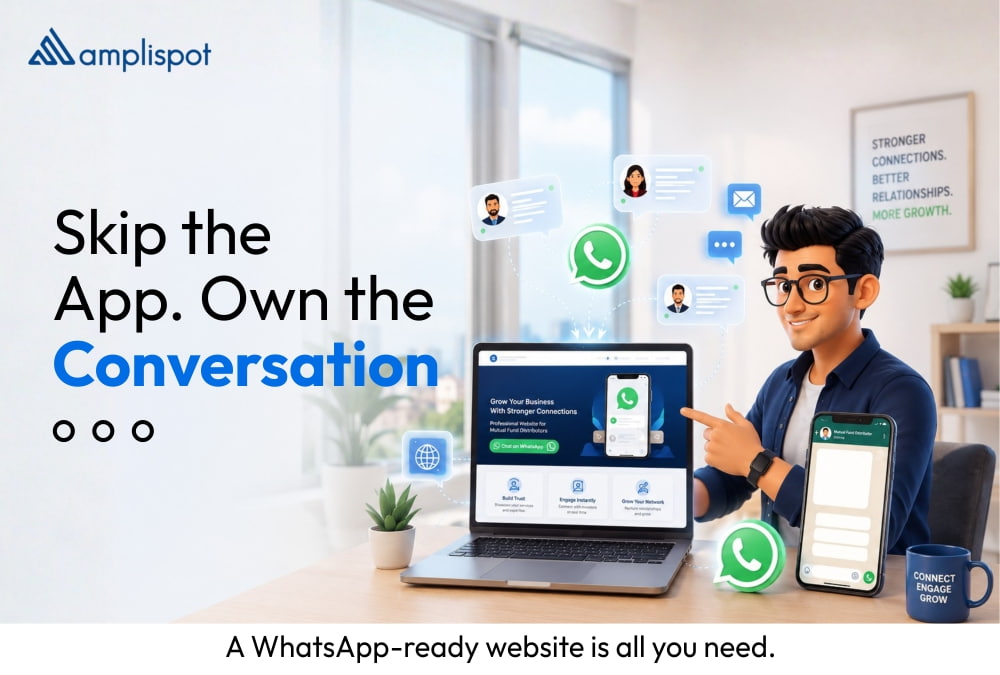
Insurance agencies no longer need to spend huge budgets building agent apps that clients rarely download and agents struggle to promote. The real opportunity is to meet clients where they already are — on WhatsApp. Instead of forcing people to install another app, agencies can give every agent a mobile-first website where clients can explore services, request quotes, download documents and click "Message Me on WhatsApp" whenever they need help. This keeps the agent-client relationship simple, familiar and active on a platform clients already use every day. It costs far less than app development, removes the friction of adoption and gives agents a digital presence that actually supports conversations, follow-ups and conversions.
Key Takeaways
- Multi-channel communication meets prospects where they prefer to connect.
- WhatsApp handles follow-ups and quick questions more efficiently than traditional channels.
- Compliance with local regulations is essential for messaging platforms.
- Integration between websites and messaging channels improves overall experience.
Apps Don't Work. WhatsApp Does. Here's Why.
When a prospect needs insurance, they are unlikely to search for an insurance app. They are far more likely to look for an agent online, usually from their mobile phone. Once they land on the agent's website, the next step should feel effortless: they see a "Chat with me on WhatsApp" button, tap it, WhatsApp opens and the conversation begins instantly. The agent can respond, share information, answer questions and move the prospect forward on a platform the prospect already uses every day.
Now compare this with the app route. Building an app is expensive, getting clients to download it is extremely difficult, maintaining it adds ongoing cost and driving engagement often depends on push notifications that many users find annoying. Every step adds friction. A mobile-first website with WhatsApp integration removes that friction by keeping the journey simple, familiar and immediate. Clients already prefer WhatsApp for everyday communication, so agents should not force them into a new platform. They should meet them where the conversation is already happening.
Click-to-Chat: The Simplest Way to Generate Conversations
A 'Click to Chat' button on an agent's website is a powerful lead generator. Prospects often have a quick question but aren't ready for a formal phone call. Data from Twilio's 2025 State of Customer Engagement Report indicates that messaging has a 98% open rate compared to just 20% for email. This low barrier to entry transforms passive website visitors into active conversations. Agents report that WhatsApp generates far more high-quality interactions than traditional contact forms. When combined with strategic lead nurturing cadences, these conversations convert at significantly higher rates because they're happening in the prospect's preferred channel.
Document Sharing and Quotes Over WhatsApp: The Real Customer Service Tool
Insurance involves a lot of paperwork, from proposals and quotes to policy documents and riders. But when everything is shared over email, the process often feels formal, slow and easy to miss. Most of this is still shared via email, which is clunky and formal. An agent who sends a quote via WhatsApp creates a faster, more modern experience. According to HubSpot's 2026 Consumer Trends Analysis, businesses using WhatsApp for customer service report a 25% increase in lead conversion rates and significantly higher customer satisfaction scores. The website serves as the professional 'front door,' while WhatsApp becomes the high-speed engine for closing deals. Interactive Collaterals take this further by allowing agents to share dynamic, engaging quotes and proposals that feel modern and personalized, not just another document.
Share Agent Expertise Through WhatsApp: Content as Engagement
An agent who publishes helpful content, blog articles, tip sheets, calculators, guides, can share this content via WhatsApp. A client has a question about disability insurance. The agent sends a link to an article: 'This explains exactly what I'm talking about.' The client reads it. They feel educated. The agent feels like they're helping, not pushing. This content sharing builds trust and keeps the agent top-of-mind between transactions. For referred prospects, agents can send helpful articles via WhatsApp: 'Your friend John recommended we connect. Here's an article on the topic you asked about.' Content, delivered through WhatsApp, becomes a customer service and engagement tool. The website publishes the content. WhatsApp distributes it. The combination is powerful.
Reminders, Updates and Relationship Building in a Channel Clients Already Use
Insurance is a relationship-based business, but relationships require touch. Agents who regularly stay in contact with clients have higher retention and more referrals. WhatsApp is a channel where this touch can happen naturally. A friendly reminder: 'Hey, it's been a year since your policy renewal. Let's schedule a check-in.' A market update: 'I saw that home values in your area increased significantly. Let's make sure your coverage is adequate.' A celebration: 'Saw that you're expecting a baby, congratulations! This is a great time to review your life insurance.' These touches, sent via WhatsApp, feel personal and timely. They're not intrusive, they're helpful. Clients appreciate them because they're delivered in a channel they use daily. The agent-client relationship deepens without the agent being pushy. A mobile-first website with WhatsApp integration makes this relationship cadence sustainable.
The Bottom Line: Technology Should Work Like Clients Communicate, Not the Other Way Around
The insurance industry has already invested heavily in technology that clients rarely want to use, from apps and portals to proprietary platforms. Meanwhile, the simplest and most effective communication tool is already in every client's pocket: WhatsApp. Smart agents and agencies are moving away from the app-first mindset and building mobile-first websites with WhatsApp integration instead. It costs less, works better and meets clients where they already are. For insurance companies and networks that want to give agents real customer engagement tools, the answer is not another app. It is a professional, mobile-first website that connects directly to WhatsApp. Agents will actually use it, clients will respond to it and the ROI will be much easier to see.
Frequently Asked Questions
Q: Is WhatsApp appropriate for sensitive insurance discussions?
Many agents use WhatsApp for follow-ups and quick questions, though compliance with local regulations is essential.
Q: How do agent websites connect with WhatsApp functionality?
Websites can include WhatsApp contact buttons or links, making it easy for prospects to reach agents through their preferred channel.
Q: What type of messages perform best on WhatsApp?
Personalized responses to inquiries and quick policy information typically perform better than broad promotional messages.
Ready to give your agents a digital edge? Explore Amplispot's platform at amplispot.com.